
Article Sidebar
Main Article Content
Abstract
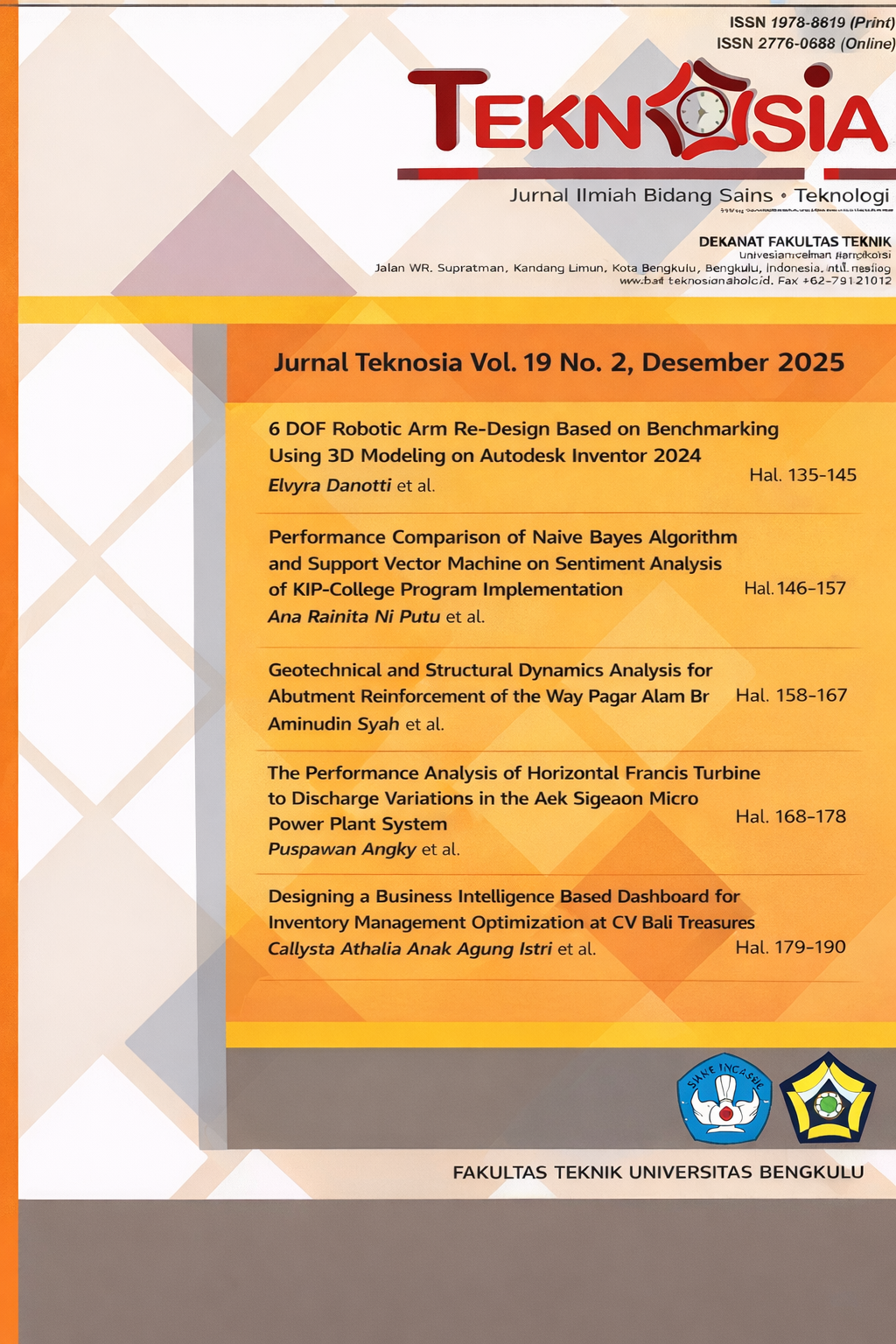
Micro hydro power plant (PLTMH) is a small-scale power plant that uses water in small discharges as its driving source. Water that can be utilized in PLTMH technology can come from irrigation channels, rivers or natural waterfalls. In general, PLTMH has three main components, namely water, water turbines, and generators. The purpose of this study is to analyze the effect of variations in water discharge on the performance of horizontal francis turbines in the Aek Sigeaon Micro Hydro Power Plant (PLTMH) system. The main focus of this study is to observe changes in input power, output power, and turbine efficiency as a result of variations in water discharge that occur in the field. Data collection was carried out using a SCADA monitoring system to obtain operational parameters in real time such as water discharge, pressure, current, and voltage. The results showed that an increase in water discharge generally caused an increase in input and output power, but was not always directly proportional to turbine efficiency. The highest turbine efficiency of 77.8% was obtained at a water discharge of 3.48 m³/s, while the lowest efficiency of 54.65% occurred at a water discharge of 6.01 m³/s. This shows that the horizontal Francis turbine works more efficiently at low to medium discharge.
Article Details
Copyright (c) 2025 puspawan angky, Hotmariana R Hutasoit, Nurul Iman Supardi, Jodi Trinaldi Manalu

This work is licensed under a Creative Commons Attribution-ShareAlike 4.0 International License.
Authors who publish with this journal agree with the following terms:
- Authors retain copyright and grant the journal the right of first publication with the work simultaneously licensed under a Creative Commons Attribution License that allows others to share the work with an acknowledgement of the work's authorship and initial publication in this journal.
- Authors are able to enter into separate, additional contractual arrangements for the non-exclusive distribution of the journal's published version of the work (e.g., post it to an institutional repository or publish it in a book), with an acknowledgement of its initial publication in this journal.
- Authors are permitted and encouraged to post their work online (e.g., in institutional repositories or on their website) prior to and during the submission process, as it can lead to productive exchanges, as well as earlier and greater citation of published work (See The Effect of Open Access).
- This work is licensed under a Creative Commons Attribution-ShareAlike 4.0 International License.
References
- . Siahaan, R., & Manalu, J. (2018). Analisis Sistem PLTMH dengan Turbin Aliran silang. Jurnal Teknik Energi, 3.
- . Kusuma, D. (2019). Karakteristik Unjuk Kerja Turbin Francis pada PLTMH. Prosiding Seminar Nasional Teknik Mesin, Universitas Negeri Semarang.
- . Zulfian, M. (2020). Uji Kinerja Turbin Francis Skala Laboratorium dengan Variasi Bukaan Katup. Jurnal Mekanikal, 6(1).
- . Liu, J., Zhang, X., & Wang, L. (2016). Experimental Flow Performance Investigation of Francis Turbines from Model to Prototype. Renewable Energy, 85, 1012–1023.
- . Widyantoro, H. (2020). Analisis Pengaruh Debit Air terhadap Kinerja Turbin pada Pembangkit Listrik Nano Hidro. Jurnal Energi Terbarukan dan Konversi, 4(1).
- . PLN UID Sumatera Utara (2024). Laporan Operasional PLTMH Aek Sigeaon. PT. Gading Energiprima.
- . PT Gading Energiprima. (2023). Profil Perusahaan dan Proyek PLTMH [Dokumen Internal Proyek Aek Sigeaon].
- . Rahmawan, I. (2020). Analisis Mekanisme Turbin Pembangkit Bertenagakan Air. Jurnal Reitims, 6(1).
- . Umar, B. M. (2024). Experimental flow performance investigation of Francis turbines from model to prototype. Applied Sciences, MDPI.
- . Kale, S. (2022). Desain dan Analisis CFD Turbin Francis. Jurnal Internasional Penelitian Teknik dan Sains, 10.
- . Li, S. (2025). Influence of Load Variation on the Flow Field and Stability of the Francis Turbine. Journal of Marine Science and Engineering, 13(Eng).
- . Joy, J. (2022). Hydraulic Performance of A Francis Turbine with A Variable Draft Tube Guide Vane System to Mitigate Pressure Pulsation. Energies, 15.
- . Amini, A. (2023). Upper Part-load Instability in A Reduced-scale Francis Turbine: An Experimental Study. Experimental Fluids, 64.
- . Departemen Energi Sumber Daya Mineral RI (2017), Pedoman Umum Pengembangan PLTMH, Direktorat Jenderal Energi Baru, Terbarukan, dan Konservasi Energi, Jakarta.
- . A. Widodo, Turbin Air dan Jenis-jenisnya, Yogyakarta: Graha Ilmu, 2015.
References
. Siahaan, R., & Manalu, J. (2018). Analisis Sistem PLTMH dengan Turbin Aliran silang. Jurnal Teknik Energi, 3.
. Kusuma, D. (2019). Karakteristik Unjuk Kerja Turbin Francis pada PLTMH. Prosiding Seminar Nasional Teknik Mesin, Universitas Negeri Semarang.
. Zulfian, M. (2020). Uji Kinerja Turbin Francis Skala Laboratorium dengan Variasi Bukaan Katup. Jurnal Mekanikal, 6(1).
. Liu, J., Zhang, X., & Wang, L. (2016). Experimental Flow Performance Investigation of Francis Turbines from Model to Prototype. Renewable Energy, 85, 1012–1023.
. Widyantoro, H. (2020). Analisis Pengaruh Debit Air terhadap Kinerja Turbin pada Pembangkit Listrik Nano Hidro. Jurnal Energi Terbarukan dan Konversi, 4(1).
. PLN UID Sumatera Utara (2024). Laporan Operasional PLTMH Aek Sigeaon. PT. Gading Energiprima.
. PT Gading Energiprima. (2023). Profil Perusahaan dan Proyek PLTMH [Dokumen Internal Proyek Aek Sigeaon].
. Rahmawan, I. (2020). Analisis Mekanisme Turbin Pembangkit Bertenagakan Air. Jurnal Reitims, 6(1).
. Umar, B. M. (2024). Experimental flow performance investigation of Francis turbines from model to prototype. Applied Sciences, MDPI.
. Kale, S. (2022). Desain dan Analisis CFD Turbin Francis. Jurnal Internasional Penelitian Teknik dan Sains, 10.
. Li, S. (2025). Influence of Load Variation on the Flow Field and Stability of the Francis Turbine. Journal of Marine Science and Engineering, 13(Eng).
. Joy, J. (2022). Hydraulic Performance of A Francis Turbine with A Variable Draft Tube Guide Vane System to Mitigate Pressure Pulsation. Energies, 15.
. Amini, A. (2023). Upper Part-load Instability in A Reduced-scale Francis Turbine: An Experimental Study. Experimental Fluids, 64.
. Departemen Energi Sumber Daya Mineral RI (2017), Pedoman Umum Pengembangan PLTMH, Direktorat Jenderal Energi Baru, Terbarukan, dan Konservasi Energi, Jakarta.
. A. Widodo, Turbin Air dan Jenis-jenisnya, Yogyakarta: Graha Ilmu, 2015.